Choosing the right welding machine is an important decision for any workshop. The machine you select can affect the quality of your welds, the types of projects you can undertake, your productivity and your overall operating costs. With different welding processes, machine types, power requirements and specifications available, it can be difficult to know where to start.
Whether you are setting up a new workshop, replacing an older machine or expanding your welding capabilities, understanding the key factors to consider can help you select equipment that matches your actual needs.
Understand the Type of Welding You Need
The first step is to consider the type of welding work your workshop handles. Different welding processes are designed for different applications, materials and working conditions.
MMA or stick welding is widely used for general fabrication, construction, repairs and maintenance. It uses a consumable electrode and does not require shielding gas, making it practical for many workshop and outdoor applications. MMA machines are also relatively straightforward to operate and can be suitable for working with mild steel and other materials when the appropriate electrodes are selected.
MIG welding uses a continuously fed wire electrode and shielding gas. It is often used where speed and productivity are important, particularly in fabrication and manufacturing environments. MIG can provide a continuous welding process and is commonly used for sheet metal, automotive work and general fabrication.
TIG welding uses a non-consumable tungsten electrode and offers a high level of control over the welding process. It can produce clean and precise welds and is often used for applications where appearance and control are particularly important.
Before purchasing a machine, determine which welding processes your workshop actually needs. Choosing a machine based on your most common applications can be more practical than simply selecting the machine with the largest number of features.
Consider the Materials You Work With
The materials used in your workshop should also influence your choice of welding machine. Mild steel, stainless steel and aluminium have different welding requirements, and not every machine is designed to handle every material or process.
For a workshop that mainly works with mild steel, an MMA or MIG machine may provide the capabilities required for many general fabrication projects. If the workshop regularly handles stainless steel or aluminium, you may need equipment with additional capabilities suitable for those materials.
Material thickness is equally important. A machine needs to provide sufficient output for the thicknesses of material you regularly weld. A workshop working primarily with thin sheet metal may have different requirements from one fabricating heavy steel structures.
Understanding your typical material range will help you avoid purchasing equipment that is either unsuitable for your work or significantly more powerful than necessary.
Check the Machine’s Amperage Range
Amperage is one of the key specifications to consider when choosing a welding machine. The required current depends on factors such as the welding process, electrode or wire size, material thickness and application.
A machine with a wider amperage range provides greater flexibility for different jobs. However, maximum amperage should not be the only specification you consider. It is also important to understand the machine’s operating range and how it performs at the current levels you are likely to use regularly.
For MMA welding, the available current should be appropriate for the electrode sizes used in the workshop. For example, different electrode diameters require different current ranges, so the machine should be compatible with the electrodes you plan to use.
Understand Duty Cycle
Duty cycle is another important specification, particularly for workshops that carry out continuous welding work.
The duty cycle indicates how long a welding machine can operate at a particular output within a specified period before it needs to cool down. A machine with a higher duty cycle can generally support longer periods of continuous welding at the specified output.
For occasional repair work, duty cycle may be less critical. However, workshops carrying out production or heavy fabrication should pay close attention to it. Selecting a machine with an appropriate duty cycle can help maintain productivity and reduce interruptions caused by overheating.
Always compare duty cycle figures at the output levels relevant to your actual work rather than looking only at the maximum rating.
Check Your Power Supply
The available power supply at your workshop is another essential consideration. Welding machines are available with different electrical requirements, so make sure the machine you choose is compatible with the power available at your premises.
Consider whether your workshop uses single-phase or three-phase power and check the machine’s voltage and input requirements. You should also consider the electrical capacity of the workshop and whether other equipment will be operating at the same time.
Using equipment that is not properly matched to the available power supply can lead to operational problems and may place unnecessary strain on the electrical system.
Consider Portability
Think about where the welding machine will be used. If all welding takes place at a fixed workstation, a larger machine may be appropriate. However, if your work involves repairs, construction sites or different areas of a workshop, portability can become much more important.
Compact inverter welding machines can be particularly useful where equipment needs to be moved frequently. Their size and weight can make transportation easier compared with some larger traditional machines.
The right choice depends on how mobile your welding work needs to be.
Look at Ease of Use
A welding machine with complicated controls may not be the most practical choice for every workshop. Consider who will operate the equipment and whether the machine’s controls and settings are easy to understand.
Features such as adjustable current, clear controls and useful indicators can make the welding process easier to manage. Some modern machines also include additional functions designed to improve arc starting and welding performance.
However, more features do not automatically mean a machine is better suited to your workshop. Focus on functions that provide practical benefits for the work you actually do.
Consider Reliability and After-Sales Support
A welding machine is an investment, so reliability should be an important consideration. Look at the manufacturer’s reputation, product quality, warranty arrangements and availability of technical support.
Access to replacement parts and service support can also be important. A machine that is difficult to repair or maintain can lead to unnecessary downtime if a problem occurs.
Before purchasing, consider not only the initial cost of the machine but also the long-term costs associated with maintenance, consumables, repairs and electricity.
Match the Machine to Your Workshop
The right welding machine is ultimately the one that matches your workshop’s actual requirements. Consider the welding processes you use, materials and thicknesses you work with, available power supply, required amperage, duty cycle, portability and level of use.
Avoid choosing a machine solely because it has the highest amperage or the most features. A machine that is correctly matched to your applications can provide better value and make your workshop more efficient.
It is also important to select suitable consumables alongside the machine. For MMA welding, the welding electrode has a direct role in the final result, so the machine and electrode should be considered together.
Welding Solutions from ASL Industrial
For workshops, fabricators and industrial professionals, ASL Limited – Industrial Division provides welding and industrial solutions designed to support a wide range of applications.
ASL Industrial manufactures welding electrodes under established brands including Goldstar and Maruthi. The Goldstar range includes E6013 general-purpose mild steel electrodes in different sizes, providing options for a variety of fabrication, repair and construction applications.
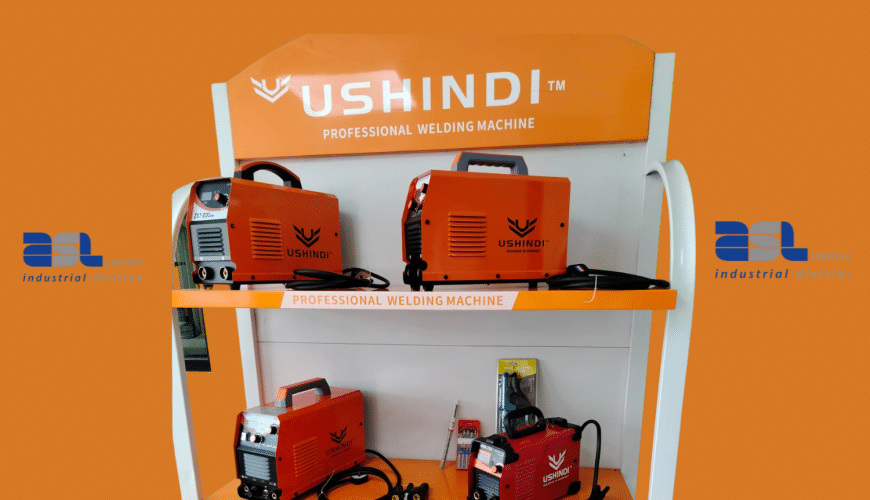
ASL Industrial also supplies professional welding equipment under the Ushindi brand, alongside professional power tools under Sali and Dartek.
Whether you are setting up a new workshop or expanding your existing equipment, choosing the right machine and pairing it with suitable welding consumables can help you achieve consistent and reliable results.
For welding machines, electrodes and other industrial products, get in touch with ASL Limited – Industrial Division.
Location: Lusaka Road, Industrial Area, Nairobi, Kenya
Call: +254 110 896 481
WhatsApp: +254 110 896 481
Email: info@aslwelding.co.ke